Albania’s Finance Minister Presents 2026 Draft Budget Focused on Growth, Welfare, and Pension Reform
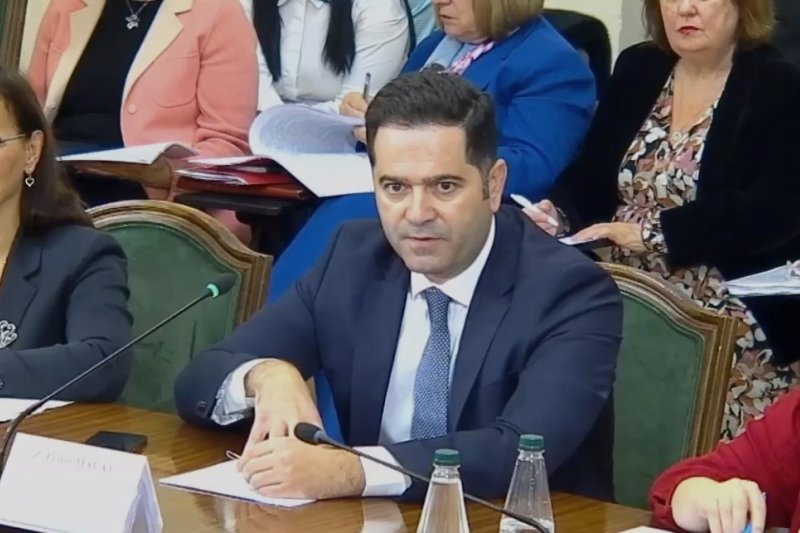
Finance Minister Petrit Malaj presented the 2026 draft state budget, calling it a strategic document that reflects the government’s commitment to sustainable development and improved living standards.
The budget foresees public expenditures of 886.7 billion lekë, prioritizing investments in modern infrastructure, digital systems, green energy, and human capital.
Malaj described the draft as a “contract between the government and citizens,” built around four key pillars:
Pension Reform, education, wages and healthcare.
Speaking about pensions, minister said that the reform is highlighted as the core of the 2026 budget. Starting January 1, 2026, pensions will increase gradually over three years, with goals such as:
Full urban pension: from 27,350 to 40,000 lekë
Partial urban: from 15,850 to 22,000 lekë
Rural: from 11,500 to 18,000 lekë
Family: from 11,400 to 18,000 lekë
Disability: from 20,000 to 30,000 lekë
Malaj said this reform aims to restore “dignity and respect” to retirees through a stronger economy.
Meanwhile, on education, the sector will receive 89.8 billion lekë (3.2% of GDP), up by 4.3 billion from 2025. Key measures include:
Free textbooks for 220,000 pupils (grades 1–9)
Support for 15,000 high school students in need
Scholarships and meals for 4,000 students with special needs
Free transport for 35,000 students and 13,500 teachers
The third key pillar is about the wages. Minister informed that from January 2026, the minimum wage will rise by 10,000 lekë, reaching 50,000 lekë, with a plan to increase it to 70,000 lekë by the end of the government’s term. Public sector wages will be indexed every two years, benefiting over 144,000 employees nationwide.
The 2026 fiscal package will not include new or higher taxes. Farmers will benefit from 1.5 billion lekë annually through VAT compensation at 10%, along with incentives for property revaluation and a “Fiscal Peace” initiative to strengthen trust between businesses and the state.
And the last one, the funding on healthcare will rise to 81.2 billion lekë (2.9% of GDP), a 4.9 billion lekë increase from 2025. The plan includes:
Medicine reimbursements for 400,000 patients
1.5 billion lekë for oncology drugs
Hospital renovation projects and improved rural healthcare centers
Vaccination programs for 180,000 children and 280,000 citizens