BALFIN Group: Looking Beyond Current Markets
BALFIN Group is an international investment group operating across 13 countries in Europe and North America, with a diversified portfolio spanning nine industries. Over more than three decades, the Group has established a strong presence across multiple markets, underpinned by financial stability, long-term partnerships, and a disciplined approach to identifying and developing new opportunities.
In this interview, Edlira Muka, CEO of BALFIN Group, discusses the strategy guiding the Group’s entry into new markets, including several European Union countries, the Caucasus, and Central Asia. She also addresses the key priorities involved in managing an organisation of this scale and complexity: developing human capital, maintaining effective corporate governance, and building the technological infrastructure needed to support operational efficiency and agile, well-structured decision-making.
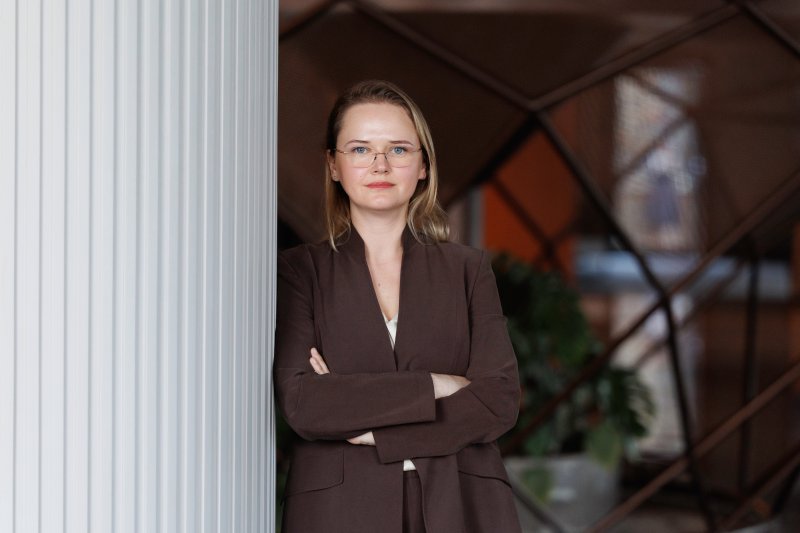
Edlira Muka, CEO of BALFIN Group
1. How would you assess BALFIN Group’s performance in 2025 and during the first part of 2026?
2025 was a very strong year for BALFIN Group’s development, but above all, it was the year when several strategic decisions made earlier began to materialize.
Our focus was, and continues to be, on investments with the potential to scale across multiple markets and create long-term value. This is reflected not only in our financial performance, but also in the confidence international financial institutions have placed in us by supporting several of our projects.
To put 2025 into numerical context, I would highlight that total assets reached EUR 3.1 billion, 18% higher than the previous year, while EBITDA reached EUR 161 million. Meanwhile, capital investments during 2025 amounted to approximately EUR 181 million.
As part of our long-term strategy, we focus on investments that create economies of scale in operations. Last year, we acquired franchise rights for two well-known European brands: KIABI, the French fashion brand for the whole family, and Denmark’s Flying Tiger Copenhagen. Both were conceived as regional platforms from day one, rather than investments limited to a single market.
At the same time, the Group’s other companies strengthened their positions and increased their weight within their respective markets. In retail, Neptun International increased revenue by 15%, while Kid Zone Network (Jumbo) grew by 13%.
Tirana Bank continued its strong growth trajectory in 2025, positioning itself as the fastest-growing bank in the market and receiving two of the industry’s most prestigious international recognitions: “Best Bank in Albania 2025” from Euromoney and “Bank of the Year in Albania 2025” from The Banker, part of the Financial Times.
In real estate development, during 2025 we expanded our international portfolio into the United States, in partnership with Crown Acquisitions, while in Austria we completed the acquisition of one of the historic buildings in central Vienna. We have concrete plans to transform this property into a hotel.
Remaining within the hospitality sector, 2025 also marked the opening of Green Coast Hotel – MGallery Collection, a project of which we are particularly proud, developed in partnership with the French group Accor.
Our shopping centers continued to record growth in visitor numbers and improvements in service and retail categories, and we also decided to invest in the family entertainment sector through HyperActive.
2026 is a direct continuation of the same strategy. Our focus is on executing projects already launched in 2025 while also developing new ones.
In retail, one of our key challenges is to further scale our existing brands beyond the Western Balkans. I would highlight here the new agreement with Jumbo to expand the brand’s activity across the Caucasus and Ukraine.
Happy has evolved beyond a loyalty program and is now licensed as an electronic money institution, offering services such as a digital wallet, “Buy Now, Pay Later” financing options, and electronic money issuance. Happy Pay provides a comprehensive digital ecosystem for modern financial transactions.
Within this year, we will also announce two new investments in European Union countries, across two industries in which we are already active, but where we are further expanding our portfolio.
Across all these initiatives, we are working closely with international financial institutions.
2. BALFIN has expanded significantly beyond Albania in recent years. What share of the Group’s revenue and investments now comes from international operations, and how do you expect this share to evolve in the coming years?
BALFIN was founded in Vienna, Austria, and from the very beginning its origins have been closely linked to operating across more than one country or market.
During the past year, around 50% of the Group’s business activity was generated outside Albania. In terms of investments, the international share is even more pronounced than in revenues, because a significant portion of the capital allocated in recent years has been directed toward markets outside Albania.
This represents a structural shift rather than a year-on-year fluctuation linked specifically to 2025.
This change has not happened by chance. It is the result of a strategy developed gradually, combining regional consolidation with entry into larger and more developed markets, where operational and regulatory standards are more demanding.
Today, we are present in 13 countries, while at the same time we have investment projects in at least eight additional markets.
This does not mean that our commitment to Albania is decreasing. We remain one of the country’s largest investors, taxpayers, and employers.
For a Group of our scale, sustainable growth requires an increasingly diversified geographic footprint that does not depend on the economic cycle of a single economy.
3. When a Group reaches BALFIN’s current scale and operates across multiple countries and industries, what becomes the main challenges in managing growth? How do you preserve efficiency, control, and speed of decision-making as the organization becomes larger and more complex?
Today, we operate in 13 countries, with more than 5,000 direct employees and around 20,000 additional people working in partner companies whose activities are closely linked to BALFIN Group companies.
In an organization of this scale, the challenge is not a lack of opportunities. The challenge is finding the right balance between speed and discipline.
The first and most important factor is people.
In a geographically dispersed organization, culture and shared standards are what truly create alignment. That is why we systematically invest in the development and promotion of our employees and leaders.
This enables us to delegate with confidence while maintaining consistent standards throughout the Group.
The second factor is our corporate governance model, which centralizes where centralization creates value and decentralizes where decentralization enables speed.
Industry-level strategy, capital allocation, Group policies, operating standards, internal audit, and technology are managed at Group level. Operational decision-making and day-to-day execution are the responsibility of individual companies and their respective structures.
We have clearly defined levels of authority, which allow a company leader to make decisions independently within an established framework, without having to wait for approval from the central structure every time.
When every decision is escalated upward, the organization slows down and accountability becomes diluted.
The third factor is technological infrastructure.
A Group of this size cannot be managed through manually prepared reports. This is why we have invested in systems that simplify employees’ day-to-day work and support reporting across specific company performance indicators.
This is an ongoing investment that is already producing positive results, particularly through the integration of artificial intelligence into several processes.
6. How is emigration affecting access to the workforce, particularly managerial and specialized talent? How difficult is it to build a management structure capable of supporting a Group operating across several countries?
I would like to begin with something that has been an important confirmation for us.
This year, BALFIN was certified as a “Top Employer”, an international recognition based on concrete human resources management practices rather than perceptions.
For a Group operating in 13 countries and competing for talent with significantly larger companies, this is an objective indicator that our standards are at the right level.
As for the question itself, I would say that the tightening labor market and competition for managerial and specialized profiles are shared realities across most of the markets where we operate, both in Europe and North America.
Workforce mobility has transformed competition for talent into an international rather than a national issue.
Our approach has been not only to compete for existing talent, but to develop it internally. This has three concrete components.
The first is systematic training.
Through our leadership development programs, each employee receives an average of 23 hours of training per year, while the Talent Pool program, launched in 2017, has developed an entire generation of leaders.
Around 50% of its participants have been promoted to senior leadership positions, including CEO roles.
For me, this is one of the most meaningful indicators we have, because it means that a significant share of our future leaders is already within the organization.
The second, and perhaps one of our strongest advantages, is internal mobility.
A Group operating across multiple countries and industries can offer something that a standalone company simply cannot: career opportunities across countries and across industries.
A young employee today can move from one Group company to another and from one country to another, while remaining within the same organization and the same culture.
This is one of the main reasons we can retain professionals who might otherwise seek experience outside the Group.
Building a truly international management structure takes years and requires patience.
It cannot simply be bought or improvised.
But it is the only sustainable way to support a Group that is growing across multiple markets and industries at the same time.
7. What are your expansion plans in the short and long term, both within and outside Albania? Are there sectors where you are looking to increase exposure and others where you believe the Group has already reached sufficient scale?
Our expansion plan is concrete and structured around several of the directions I mentioned earlier.
In retail, BALFIN Group has for many years been a partner of several prestigious international brands.
We will continue in this direction both through new brands with which we are currently in discussions and through existing partners with whom we are expanding into new markets.
A major step is the agreement with Jumbo S.A., which gives us the right to develop the brand in six new markets: Ukraine, Georgia, Armenia, Azerbaijan, Kazakhstan, and Uzbekistan, supported by a central logistics hub in China.
This is our most ambitious geographic expansion to date and, for the first time, takes us beyond Europe.
With KIABI, we will expand our presence in Albania and across the region, combining the physical retail network with online services.
For Flying Tiger Copenhagen, our target is to exceed 50 stores in the region within five years.
With these same partners, we are also holding discussions regarding our expansion into three European Union countries.
In family entertainment, our initial investment in HyperActive amounts to EUR 34 million across Albania, Kosovo, and North Macedonia, with further expansion plans for Vienna and Berlin.
The North Macedonia project is expected to be completed within 2026, while the project in Albania is expected to begin soon.
In asset management, we are also expanding the Group’s portfolio into Germany.
We are very enthusiastic about this because, although this is an industry we know very well, entering a new country still represents a challenge.
It is still too early to share further details, but the direction is clear: assets that generate sustainable income in developed markets, combined with the repositioning of those assets to better respond to market and consumer demand.
In hospitality, as I mentioned earlier, we will soon have concrete projects in two European countries.
In Albania, meanwhile, we will introduce further collaborations with major international hospitality names, such as Nammos Hotels & Resorts.
One industry to which we are paying particular attention is fintech.
Happy Pay is a very interesting technological development that we are initially building in Albania, while also developing and positioning it as a regional service.
The idea behind it is to offer individuals and businesses fast and simple financial solutions where they need them at the point of purchase.
Happy Pay offers electronic payment processing, a digital wallet, electronic money, “Buy Now, Pay Later” credit solutions, as well as POS systems and kiosks for business customers.
Our advantage is that we are not building a financial product in isolation. We are building it on top of an existing customer base, merchant network, and consumer knowledge that we already have.
Consumer financing remains an area with significant room for further development in both Albania and the wider region.
8. How do you see the Albanian economy developing in the coming years as the country progresses toward European Union membership? What changes do you expect integration to bring for large Albanian companies?
We believe that, in its initial phase, European integration will represent a challenge.
Not only for the countries in the region preparing to join the European Union, but also — and perhaps especially for their businesses.
The reason is simple.
Membership does not only provide access to the Single Market; it also brings a regulatory framework, reporting standards, environmental and sustainability requirements, competition rules, and levels of transparency that are significantly more demanding than current standards.
Companies that are not prepared in advance will feel the pressure immediately, particularly because they will simultaneously face the entry of European operators with significantly greater scale and lower costs of capital.
We have been preparing for this for years.
And this is where one of the greatest advantages of our international presence becomes evident.
We have been operating within the European Union for years, where these standards are not optional but a requirement for doing business.
The experience we have gained there has enabled us to structure our companies as though they were already operating fully within the EU: with the same governance policies, the same financial reporting standards, and the same audit and compliance requirements.
This helps us significantly because it means that, for us, integration will not represent a moment of adjustment, but rather a continuation of what we are already doing.
As for the Albanian economy, I am optimistic.
The starting point is positive, with steady economic growth and controlled inflation.
Integration will bring three fundamental benefits: greater regulatory predictability, which for an investor planning with a ten-year horizon is just as valuable as fiscal incentives; a lower cost of capital as country risk declines; and increased investment in infrastructure.