New BoA Regulation to Reduce Card Payment Fees
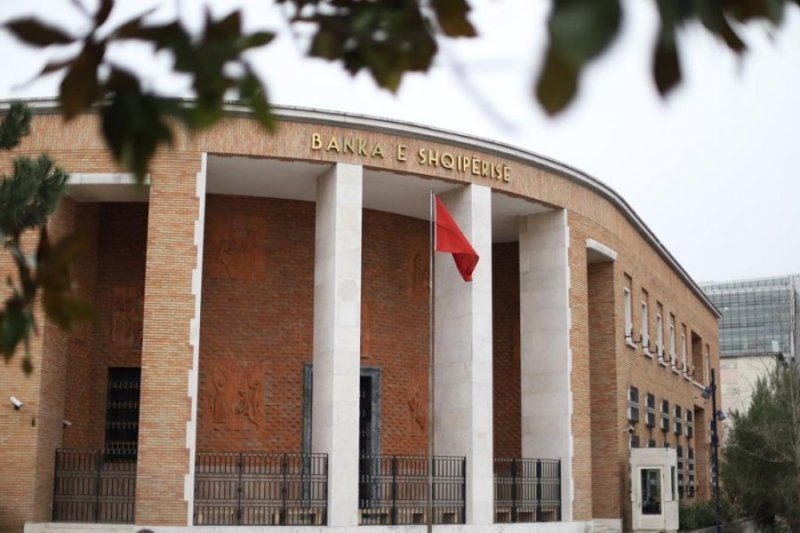
The Bank of Albania has submitted for consultation with stakeholders the draft regulation “On interchange fees for card-based payment transactions”.
The draft regulation is an adaptation of the 2015 European Union directive of the same name and has as its main objective the reduction of fees that banks charge merchants for accepting card payments.
In the sense of the regulation, an interchange fee is a fee paid for each direct or indirect transaction between the issuer and the acquirer involved in a card-based payment transaction. The net compensation or other agreed remuneration is considered part of the interchange fee.
According to the draft regulation, payment service providers cannot apply an interchange fee higher than 0.2% of the transaction value when it is carried out with a debit card and 0.3% of the transaction value when it is carried out with a credit card.
In simpler terms, the interchange fee is the fee paid by the merchant’s bank that accepts the payment to the bank that issued the buyer’s card, each time the consumer makes a payment using a card.
Setting limits on this cost element is expected to bring a significant reduction in the total commission that merchants pay for card sales. According to sources from the banking sector, the current level of interchange fees can be estimated on average close to the 1.5% limit, always referred to as an indicative level, because the level of commissions is different, depending on the type of business activity.
However, interchange fees are not the only element of the total commissions that a merchant pays for each card sale. This structure also contains two other elements.
Scheme or network fees are fees that are charged directly by global card payment scheme companies, such as Visa or Mastercard. Both banks (the issuing and acquiring banks) pay these fees for using the global network of schemes to authorize and process the transaction. They are small fees per transaction, but they accumulate in large volumes. In addition to the commission, there is a fee called the acquirer markup. This is the part that the merchant bank (the one that has installed the POS device or online payment gateway) keeps. This fee covers the cost of the device, the technical processing, and the risk that the bank assumes by cooperating with the merchant.
Taking all the commission items together, the commission that a merchant pays to the bank for card payments can reach up to 3%, in the case of payments with cards issued abroad. For payments with cards issued by domestic institutions, commissions are lower.
Setting a ceiling for one of the commission items (interchange fees) is expected to significantly reduce the total commission. According to the Bank of Albania, the level of commissions could be reduced to 1%; however, representatives of the banking sector do not believe that the reduction can be at these levels, but see the 1.5% limit as a more realistic threshold.
The approval and implementation of the regulation in question, however, is still expected to take time.
The process is conditional on the approval of amendments to the law “On payment services”, amendments that will more clearly define the right of the Bank of Albania to regulate these commissions.