
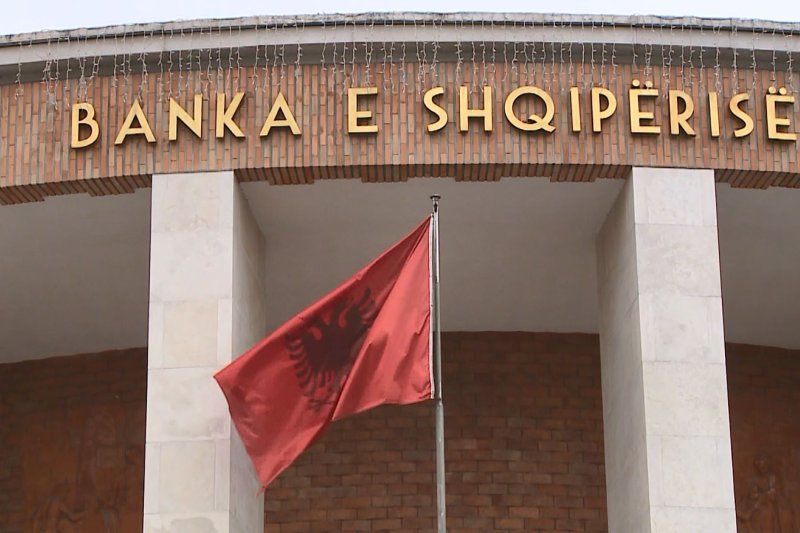
BoA to Build an Internal Framework for AI
The Bank of Albania aims to build an internal framework for artificial intelligence, in line with European Union standards, ensuring a responsible, transparent, and secure use of this technology.
The Deputy Governor of the Bank of Albania, Olta Zaçaj, stressed that this technology represents an important opportunity for increasing efficiency, improving data analysis, and strengthening supervisory processes.
Zaçaj made this statement at the Constituency Meeting of the International Monetary Fund (IMF) and the World Bank Group (WB), held in Lisbon, Portugal.
The meeting brought together central bank governors, finance ministers, and senior representatives of the member countries of the Constituency, with the aim of discussing the latest developments in the global economy, the challenges facing the economies of the member countries, as well as the future priorities of the International Monetary Fund and the World Bank Group.
The discussions focused on the impact of geopolitical tensions on the world economy, the challenges related to inflation, economic growth, and financial stability, developments in the field of artificial intelligence, its use by institutions, and the impact it has on the labor market and productivity. The latest developments on the agenda of the IMF and the World Bank were also discussed.
The International Monetary Fund and the World Bank Group presented their strategic priorities, as well as their assessments of the outlook for the world economy. In particular, the importance of maintaining macroeconomic stability, strengthening the resilience of economies to external shocks, and accelerating structural reforms to support long-term growth was highlighted.
During the discussions, Deputy Governor Zaçaj presented the latest economic developments in Albania, underlining that the Albanian economy has continued to demonstrate resilience in the face of uncertainties in the external environment. She emphasized that economic growth remains solid, supported by domestic demand, tourism, and credit expansion, while inflation continues to fluctuate close to the Bank of Albania’s target.
Zaçaj emphasized the role of the Bank of Albania in maintaining price and financial stability through a prudent monetary policy. She also underlined that the Albanian banking sector continues to be characterized by a high level of capitalization, sufficient liquidity, and historically low levels of non-performing loans.
The First Deputy Governor also focused on the importance of continuing structural reforms and accelerating the European integration process. In this context, she highlighted the benefits that the operationalization of SEPA transfers is bringing, as an important step towards financial integration with the European Union.